Description
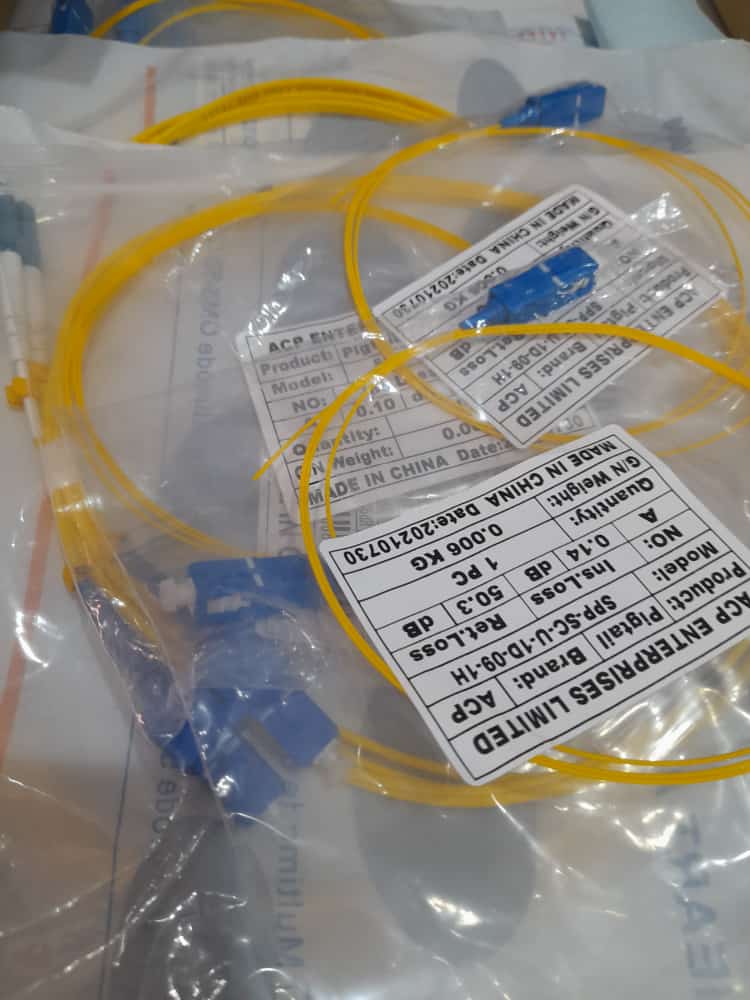
Pigtail fiber patch cord is typically a fiber optic cable with one end factory pre-terminated fiber connector and the other exposed fiber. It is usually suitable for field termination using a mechanical or fusion splicer. Compared with quick termination or epoxy and polish connections placed on the field site, the pre-terminated connectors provide time-saving, superior performance, and reliability.
Key features
- Single-sided termination: A pigtail has a pre-installed connector on one end, but the other end is a loose, bare fiber core ready for splicing.
- Fusion splicing: The bare fiber end is designed to be fused to an existing optical cable through a process called fusion splicing.
- Shorter length: Pigtails are typically shorter than standard patch cords and are used for short-distance connections within equipment.
- Protection: They often have a partial outer jacket that can be removed to fit more neatly inside equipment, allowing for a tighter bend radius and less space.
- Variety: Pigtails are available in both single-mode and multimode fiber types, and various connector types (like LC, SC, or ST), polish types (PC, UPC, APC), and jacket options (including armored for harsh environments).
Pigtail fiber patch cord Typical use case
- A long fiber optic cable is brought into a terminal box or distribution frame.
- The bare end of the long cable is spliced to a fiber optic pigtail.
- The pigtail’s connector end is then plugged into an active optical device, such as a transceiver or a patch panel, to complete the connection

Reviews
There are no reviews yet.