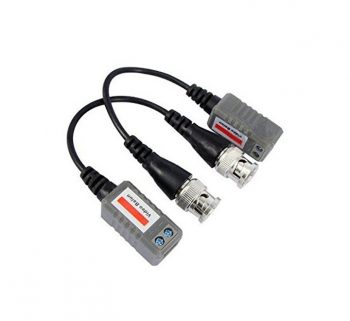
Description
video baluns is a device that enables video signals to be transmitted over twisted pair cables (like CAT5/6) instead of traditional coaxial cables. It essentially converts a single-ended (unbalanced) video signal into a balanced signal, allowing for longer cable runs and easier installation with readily available UTP (Unshielded Twisted Pair) cabling
n
nIt enables the transmission of video using unshielded twisted pair wire instead of coaxial cable. The word “balun” comes from combining the terms balanced and unbalanced. The function of a balun is to transform an unbalanced signal into a balanced signal.
n
n
n
What it does:
n
n
n
n
n
-
n
-
n
nnnConverts signal impedance:
n
n
nVideo signals, typically 75 ohms, are converted to 100 ohms for transmission over twisted pair cables. The receiving balun then converts the signal back to 75 ohms.
nnnnn
n
n
n
n
n
n
-
n
nnnEnables longer cable runs:
n
n
nBaluns allow video signals to travel further than coaxial cables without significant degradation, especially when using active baluns.
nnnnn
n
n
n
n
n
n
-
n
nnnReduces installation costs:
n
n
nUsing UTP cables (like those in Ethernet networks) is often more cost-effective and easier to manage than running coaxial cables.
nnnnn
n
n
n
n
n
n
n
n
n
n
n
n
n
n
Types of Video Baluns:
n
n
n
n
n
-
n
- Passive Baluns: These don’t require power and are suitable for shorter distances.
- Active Baluns: These require power and are used for longer distances. They often include amplification and signal processing for better performance.
nnnnn
n
n
n
n
n
n
n
n
n
How it works:
n
n
n
n
n
-
n
-
n
nnnTransmission:
n
n
nA balun is placed at each end of the twisted pair cable. One connects to the camera, and the other connects to the recording device (DVR or other).
nnnnn
n
n
n
n
n
n
-
n
nnnSignal conversion:
n
n
nThe transmitter balun converts the video signal to a balanced signal, and the receiver balun converts it back to an unbalanced signal for the recording device.
nnnnn
n
n
n
n
n
n
n
n
n
n
n
n
n
Benefits of using video baluns:
n
n
n
n
n
-
n
- Cost-effective: UTP cables are cheaper than coaxial cables.
nnnnn
n
n
- Easier installation: UTP cables are smaller, more flexible, and easier to run than coaxial cables.
nnnnn
n
n
- Longer distances: Active baluns can extend transmission distances significantly.
nnnnn
n
n
- Flexibility: Baluns can be used with various video formats (AHD, HD-TVI, HD-CVI, CVBS).
n
n
n
n
n
n

Reviews
There are no reviews yet.